
Eight structured philosophy programs designed for professionals, students, and lifelong learners. All courses run in small cohorts with expert facilitation.
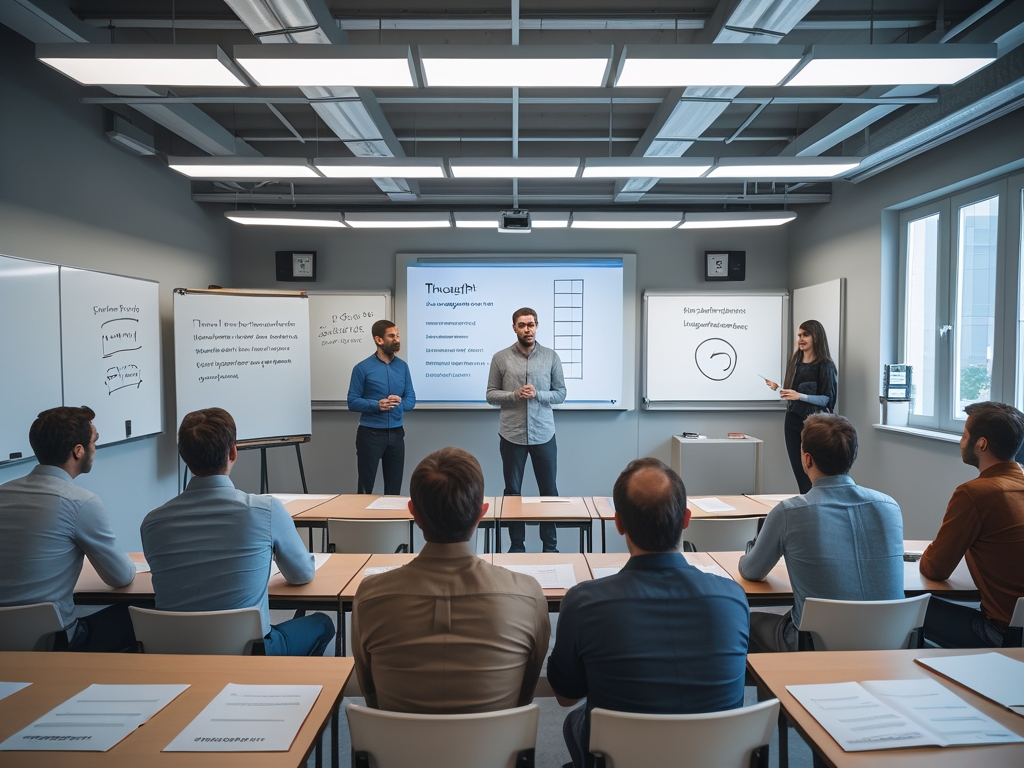
Examine the ethical and philosophical dimensions of emerging technologies. This course covers data ethics, algorithmic decision-making, digital privacy, and the philosophy of information. Participants develop frameworks for evaluating technological systems through ethical lenses drawn from consequentialism, deontology, and virtue ethics.

Investigate moral questions in medicine, genetics, and healthcare policy. Topics include informed consent, end-of-life decisions, genetic modification, resource allocation, and reproductive ethics. The course draws on both analytic and continental traditions to develop nuanced ethical reasoning in healthcare contexts.
Explore philosophical frameworks for understanding ecological responsibility and sustainability. This course examines deep ecology, eco-feminism, animal ethics, climate justice, and indigenous environmental philosophies. Participants analyse policy case studies through multiple ethical frameworks.
Critically examine the philosophical foundations of economic theory and practice. Topics include rational choice theory, the ethics of markets, distributive justice, the philosophy of money, and the relationship between economics and human flourishing. This course bridges philosophical inquiry and economic thinking.
Engage with major movements in 20th and 21st-century European philosophy. The course covers existentialism, structuralism, post-structuralism, critical theory, and deconstruction. Participants read primary texts by thinkers including Heidegger, Foucault, Derrida, and Arendt, developing skills in philosophical interpretation.
Master the methods of logical analysis, philosophy of language, and formal reasoning. This course covers propositional and predicate logic, the analytic-synthetic distinction, philosophy of mind, and modal reasoning. Participants develop precision in argument construction and evaluation.
Examine the philosophical foundations of educational practice. Topics include the purpose of education, theories of knowledge and learning, critical pedagogy, the ethics of assessment, and the relationship between education and democratic society. Particularly relevant for educators and policy makers.
Study the philosophy of conscious experience and perception. This course introduces Husserl's phenomenological method, Merleau-Ponty's embodied cognition, and contemporary applications in cognitive science and psychology. Participants learn to apply phenomenological analysis to questions of perception, emotion, and intersubjectivity.
Contact us for a free consultation. We can help you identify the program that best matches your interests, background, and professional goals.